Category Archives: US History

Today in Catholic History – The Last Episode of The Flying Nun

On 18 September 1970, the last episode of the The Flying Nun was broadcast. The sitcom, which began on 7 September 1967, lasted 82 episodes.

Based on the book “The Fifteenth Pilgrim” by Tere Rios, the series focused on the life of Sister Bertrille, a novice of the Daughters of Charity of the Convent San Tanco in Puerto Rico. Sister Bertrille was played by Sally Field. Due to the starched cornette of her habit and her weight of only 90 pounds, Sister Bertille was able to use the wind to fly – which could be both helpful and problematic. As Sister Bertille explained, “When lift plus thrust is greater than load plus drag, anything can fly.”

Tere Rios came upon the idea of a flying nun after a friend told her of seeing a nun with a large cornette almost fly away on a Paris street. Indeed, shortly after her book “The Fifteenth Pilgrim” was accepted for publication, the Daughters of Charity changed their habits for a much smaller veil. The publisher had decided to forgo publishing the book on the grounds that it was now dated. However, Rios persuaded the publisher to issue the book by suggesting that perhaps the reason why the Daughters of Charity changed their habits was because the events of her book really happened.

While, the novelty of a Flying Nun attracted viewers, it made it difficult for writers of the sitcom to come up with ever new plot lines involving flight every week.

The producers of the show did look for input from American Catholics. Cardinal McIntyre of Los Angeles wanted Sister Bertrille to be a novice because no vowed nun would behave so frivolously. He also wanted to make sure that there would be no romantic attraction between Sister Bertrille and one of the main lay characters. Sister Michael Marie, the vocations director of the diocese of Los Angeles and technical advisor for the show, wanted to make sure that the Mother Superior was not portrayed too sternly or authoritarian.

In addition to the support of Cardinal McIntyre, John Francis Cardinal Spellman of New York and Archbishop Philip Matthew Hannan of New Orleans also endorsed the program as did the National Catholic Office of Radio and Television. The NCORT hoped to use The Flying Nun as a means of encouraging vocations.

Today in Catholic History – Tony Mélendez plays for Pope John Paul II

On 15 September 1987, Tony Meléndez sang his song “Never Be the Same” at a special performance for Pope John Paul II.

Tony Melendez was born without arms because his mother had taken Thalidomide while she was pregnant, Thalidomide had been prescribed for pregnant women to treat nausea but was later discovered to cause birth defects. Despite his disability, Tony learned how to play the guitar with his feet.

Tony’s performance before Pope John Paul II at the Universal Ampitheater in Los Angeles, deeply moved the Holy Father. Pope John Paul II would kiss Tony on the right cheek and tell him, “Tony–you are truly a courageous man. You are giving hope to all of us. My wish to you is to continue giving this hope to all the people.”

Tony would later say that it was the Holy Father’s words that would inspire him to continue his ministry and his music. His performance before the Holy Father would in turn lead to many appearances on TV and concerts throughout the United States and the world.

Video of Tony Melendez’s performance before Pope John Paul II

Today in Catholic History – The Beginning of the Plowshares Movement

On 9 September 1980, Fr. Daniel Berrigan, SJ and his brother Philip Berrigan, Fr. Karl Cabatand five others began the Plowshares Movement when they broke into a General Electric Nuclear Missile plant where nose cones for the Mark 12A were made. The group, which would come to be known as the Plowshares Eight, struck the nose conses with hammers, poured blood on blueprints and offered prayers for peace. They were arrested and after ten years of appeals were sentenced for 23 1/2 months of parole – having already spent a significant time in prison. A movie about the event appeared in 1982 as “In the King of Prussia”.

At trial, the members of the Plowshares Eight would argue that their actions were a justified response because the Nuremburg Trials in Germany gave every citizen the right to act against crimes of humanity – in this case the threat of nuclear war. However the trial judge ruled that the defendants motives were irrelevant.

The Plowshares Movement would conduct over seventy acts of destruction against weapons in various sites around the world – the Berrigans participated in several of these acts. Each act was to be non-violent and seen as a symbolic attempt to turn weapons into plowshares. The Plowshares Movement would also inspire similar groups to imitate their methods.

We choose to obey God’s Law of life, rather than a corporate summons to death.

In our action, we draw on a deep-rooted faith in Christ, who changed the course of history through his willingness to suffer rather than to kill.

Today in Catholic History – The Death of Fr. Vincent Capodanno

On 4 September 1967, Navy Chaplain Father Vincent Capodanno was killed by Northern Vietnamese gunfire as he ministered and gave last rites to wounded and dying US soldiers. Despite being seriously wounded in the face and hands, he went to help a wounded soldier just a short distance from an enemy machine gun – which shot and killed him.

Fr. Capodanno, or as the soldiers called him “The Grunt Padre” had already been wounded twice before during his time in Vietnam when he volunteered to travel with a Marine unit being sent to the dangerous Que Son Valley. After his unit of 500 soldiers arrived at the valley, it was attacked by a force of 2,000 North Vietnmanese. Despite being outnumbered, Fr. Capodanno stayed with his unit until his death, encouraging the soldiers and offering both physical and spiritual assistance.

Fr. Capodanno would posthumously be awarded the Medal of Honor and his cause for canonization has been opened. The frigate USS Capodanno has been named after him. The USS Capodanno was the first ship the US fleet to receive a papal blessing.

For more on Servant of God, Fr. Vincent Capodanno

Today in Catholic History – Prince Demetrius Augustine Gallitzin leaves Holland for the United States

On 18 August 1792, Prince Demetrius Augustine Gallitzin set sail from Rotterdam, Holland. He would arrive in Baltimore, Maryland on the 28th of October.

Though he was a Russian prince, Demetrius sailed under the name of Smith in order to reduce his expenses and for some time was known as Augustine Smith in the United States. Though he had been born Orthodox, through the influence of his mother he converted to Catholicism in 1787 and when he arrived in the United States he entered into St. Mary’s Seminary in Baltimore as one of its first students. He would be the first priest to receive all of his orders from tonsure to the priesthood in the United States.

Gallitzin would later travel to Pennsylvania, settling in the town he called Loretto which would become the first English speaking Catholic settlement west of the Allegheny Front. While Gallitzin was suggested for several episcopal positions in Pennsylvania and Ohio, he was never ordained to the episcopate. After his death he was named Servant of God.

Official website for the canonization of Father Gallitzin

Today in Catholic History – The Ursuline Convent Riots

On the 11 August 1834, angry mobs of Protestants burned a convent of the Ursulines to the ground in Charleston, Massachusetts (near Boston).

Prior to the attack, tensions had been growing between the Catholics and Protestants. The vast majority of the women enrolled at the school operated by the Ursulines belonged to the the Protestant upper class and Boston was also experiencing a large increase in Irish Catholic into the labor market. Thus both religious and economic tensions contributed to the later riots.

However, a more immediate cause of the riot involved Rebecca Reed, a young Episcopalian, who had attended the Ursuline school and would later decide to enter the Ursuline novitiate in 1832. She left after six months and later wrote a text entitled “Six Months in a Convent” accusing the Ursulines of forcing girls into Catholicism and the convent as a place of terrible punishment.

On 28 July 1834, one of the Ursuline sisters who taught at the convent, Sister Mary John (Miss Elizabeth Harrison), mysteriously appeared at the home of a local resident in an agitated condition and asking to be taken to the home of an acquaintance. The resident took Sister Mary John where she wished to go and the next day returned to her acquaintance’s home to ask why she had desired to leave the convent only to find that Sister Mary John had returned to the convent accompanied by the Ursuline Mother Superior Mother Mary St. George and the bishop of Boston, Benedict Fenwick.

Local papers began to publish stories about a mysterious woman who was being kept against her will at the Ursuline convent. On 10 August, signs appeared in Boston saying: “To the Selectmen of Charlestown!! Gentlemen: It is currently reported that a mysterious affair has lately happened at the Nunnery in Charlestown, now it is your duty gentlemen to have this affair investigated immediately[;] if not the Truckmen of Boston will demolish the Nunnery thursday [sic] night—August 14.”

Concerned about the call for violence, local officials, with the permission of the Mother Superior, went to the convent to interview Sister Mary John. They prepared a statement to be published in the Boston Gazette that said Sister Mary John was in good health, was free to leave if she wished, and that the convent was in good condition.

However around 8:00 PM, a group of angry Protestants went to the convent demanding release of the “mysterious lady”. One nun appealed to the mob to disperse only to have the mob promise her protection should she leave. The crowd would become further incensed when the Mother Superior appeared and threatened the crowd: “The Bishop has twenty thousand of the vilest Irishmen at his command, and you may read your riot act till your throats are sore, but you’ll not quell them.”

Thus, while the crowd did disperse for a few hours, at about 11:00, a crowd of between fifty and sixty men set fire to tar barrels on the convent grounds. Fire companies that were called for help, failed to intervene, instead joining the crowd, which eventually grew to around 2,000 people. The crowd attacked the convent, breaking down doors and windows, and ransacked the buildings. The nuns and students were forced to flee. The rioters would eventually set fire to the buildings and destroyed them.

In response, the government of Boston passed a resolution condemning the riot and initiating an investigation into the attacks. Rewards were offered for information leading to the arrest of the perpetrators. Bishop Fenwick called for the Catholics to refrain from any revenge and thanked the Boston authorities for their actions.

Troops and police were ordered stationed at several sites around Boston and Charleston, including the Cathedral of the Holy Cross. However, no troops were posted near the remains of the convent and at about 10:00 PM on 12 August, a crowd again attacked the grounds of the convent. The crowd destroyed the convent gardens and orchards and fences. They set bonfires on the grounds.

While thirteen would be eventually arrested, twelve would be eventually acquitted at trial – including the self-confessed ringleader of the mob. Only a sixteen-year-old who had participated in a book burning was convicted. He was sentenced to life imprisonment at hard labor but was pardoned by the governor in response to a petition signed by five thousand citizens of Boston, including Bishop Fenwick and Sister Mary St. George.

The Boston archdiocese tried several times to receive indemnification from the city, county and state government on the grounds that they had failed to protect the convent but without any success.

There is a latter account of one Protestant gentleman from Boston seeking an audience with Pope Gregory XVI only to be asked, “Was it you who burned down my convent?”

The land on which the convent was built is now part of Somerville, MA. Nothing remains of the convent but some of the bricks of the convent are now part of the arch of the front vestibule in the present Cathedral of the Holy Cross in Boston.

Wikipedia has many good links to more information on the riots
Today in Catholic History – The Ordination of Fr. Solanus Casey, OFM Cap.

On 24 July 1904, Solanus Casey was ordained to the priesthood by Archbishop Sebastian Messmer at the St. Francis of Assisi Church in Milwaukee, Wisconsin. He will be ordained a “sacerdotus simplex” or “Mass Priest” which prevented him from hearing confessions or preaching doctrinal sermons because of a judgment that he had not performed sufficiently well in his seminary classes. Indeed, Fr. Casey had great difficulty in seminary as most of the classes were in German, with which he was not very familiar.

Throughout his life as a member of the Capuchin Franciscans, Fr. Casey will acquire a reputation for holiness. 20,000 people would visit his coffin just prior to his burial. He was been declared venerable by Pope John Paul II.

About Fr. Solanus Casey

Today in Catholic History – Junipero Serra establishes the Mission San Antonio de Padua

On 14 July 1771, Fr. Junipero Serra established the Mission San Antonio de Padua in Alta California in a valley at the foot of the Santa Lucia Mountains known as the “Valley of the Oaks”. Fr. Serra along with two other Franciscans began the mission by the hanging of a large bronze bell on an oak tree. Fr. Serra rang the bell while loudly calling for all “gentiles” to come and receive the faith of Jesus Christ. When the other friars pointed out to Junipero that there were no gentiles in sight, Fr. Serra is reported to have said, “let me give vent to my heart which desires that this bell might be heard around the world.”

One of the Native Americans came to the first Mass celebrated by Fr. Serra a short time later. Fr. Serra offered gifts to the curious visitor who soon returned with others of his tribe. The friendship of the native people was very important for the survival of the young mission.

Junipero Serra would soon leave to establish other missions, leaving behind Frs. Miguel Pieras and Buenaventura Sitjar to begin the actual construction of buildings and farms.

Two years later, the Franciscan friars would move the mission because of problems with the water supply at the original site. The mission continues to be an active parish today.

More on the Mission

#239 – The Family That Prays Together

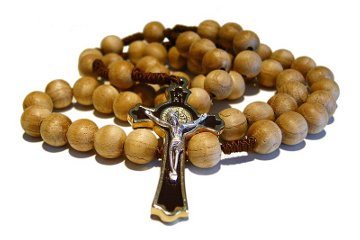
Fr. Patrick Peyton dedicated his life to promoting family prayer and devotion to the Blessed Virgin Mary throughout the world. The Rosary Priest attracted huge crowds and the attention of Popes and the CIA.

Links:
Family Rosary – Continues Fr. Peyton’s mission to spread devotion to the Rosary throughout the world and includes some of the Radio Theater programs produced by Fr. Peyton.
Family Theater Productions – the radio and television organization established by Fr. Peyton to promote religious programs.
The OTR Network Library has several of the Family Theater radio programs available [requires Real Player]
Hill Number One – a Family Theatre television program produced by Fr. Peyton and contains an early appearance of actor James Dean
Information on the cause of Fr. Peyton

Sources
Hugh Wilford. The Mighty Wurlitzer. How The CIA Played America. 2008
Richard Gribble, CSC. American Apostle of the Family Rosary 2005.
Richard Gribble, CSC. “Anti-Communism, Patrick Peyton, CSC and the C.I.A.” Journal of Church and State No. 3 2003

Be sure to check out the CUTH blog for more on the history of the Catholic Church

Also check out the other great podcasts at the Starquest Production Network

Send e-mail questions and comments to catholicunderthehood@gmail.com or leave voice mail at 1 740 936 4354

To listen, just click on the link below:

podcasticon#239 – The Family That Prays Together

Today in Catholic History – The Baptism of Chitomachon

On the 5th of July, 1640, having been sufficiently instructed in the mysteries of faith, he [the Tayac or Emperor Chitomachon] received the Sacramental waters with solemnity in a little chapel, which for that ceremony and for divine worship he had erected in Indian fashion out of the bark of trees.

These are the words of Fr. Thomas Hughes, S.J. describing the baptism of Chief [Tayac] Chitomachon [Kittamaquund] of the Piscataway and his wife by Fr. Andrew White, S.J. Also present was the governor of the Province of Maryland, Leonard Calvert.

Chitomachon began receiving catechism after being cured of an illness with the aid of medicine provided by Fr. Andrew.

After baptism, Chitomachon received the Christian name of Charles and his wife that of Mary. Chitomachon and his wife also received the Sacrament of Marriage on this same day, a Cross was erected to memorialize the event and a Litany to the Blessed Mother was said. The chapel in which Chitomachon was baptized was the first chapel in Prince George’s County, Maryland.

Chitomachon would die shortly after his baptism in 1641, but other Piscataway would later also accept Christianity from Fr. White.